|
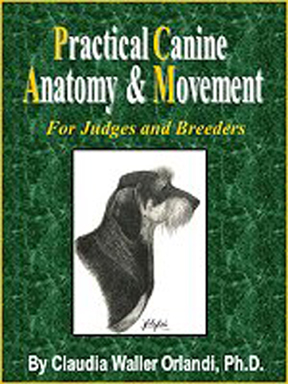
Practical Canine Anatomy & Movement |
|
Home Study Program |
|
|
Practical Canine Anatomy & Movement Contents and Course Design
|
|
|
The Practical Canine Anatomy
Toolkit consists of three components: |
|
(1) a textbook portion,
(2) a series of workbook exercises
and (3) a set of flashcards. |
|
|
|
|
|
|
The
Practical Canine Anatomy
& Movement
Textbook
|
The
Practical Canine
Anatomy & Movement textbook
summarizes key anatomical concepts
that judges and breeders should know
and focuses on surface and
skeletal parts of the
standing and moving dog within the
context of structural balance.
Important points are
indicated in bold type
and are underlined.
Discussions of anatomy are
easy-to-understand and
are made less intimidating by using
extra large type and incorporating
illustrative drawings.
|
|
|
 |
|
Included at the end of the
textbook is a series of Smart Charts,
a sample of which is shown below. Smart
Charts conveniently summarize the
key points of canine anatomy and
movement that are discussed in the textbook. |
|
|
|
|
The
Practical Canine Anatomy
& Movement Workbook |
|
is accompanied by True and False,
Matching and Multiple Choice workbook
exercises that are designed to help breeders
and judges learn the materials.
|
|
|
|
|
Workbook exercises allow judges and
breeders to review their knowledge of fundamental anatomical
features and concepts that are necessary to successfully judge and
breed dogs. The correspondence school format of the
exercises permits judges and breeders to work at home
and complete the questions at their own pace. Some
judges and breeders may complete these exercises in a day or a week;
others may take longer. The emphasis is on convenience and
flexibility.
|
|
|
|
|
|
The
Practical Canine Anatomy
Textbook
|
|
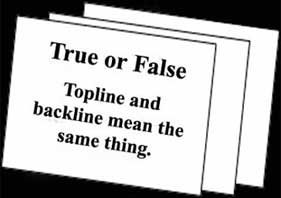
The enclosed set of Flashcards
helps judges and breeders review
their knowledge of basic canine
anatomy. |
|
|
|
|
|